

Monday, June 8, 2009


Sunday, June 7, 2009
The Deja Vu Efffect
Déjà vu "already seen"; also called paramnesia, or promnesia, is the experience of feeling sure that one has witnessed or experienced a new situation previously (an individual feels as though an event has already happened or has happened in the near past), although the exact circumstances of the previous encounter are uncertain. The term was coined by a French psychic researcher, Emile Boirac (1851–1917) in his book "L'Avenir des sciences psychiques" ("The Future of Psychic Sciences"), which expanded upon an essay he wrote while an undergraduate. The experience of déjà vu is usually accompanied by a compelling sense of familiarity, and also a sense of "eeriness," "strangeness," or "weirdness." The "previous" experience is most frequently attributed to a dream, although in some cases there is a firm sense that the experience "genuinely happened" in the past.
The deja vu phenomenom has been attributed to links to a disorder such as temporal lobe epilepsy, or schizophrenia. Certain phameceuticals may bring about the deja vu effect. Some people point to Parapsychological abilities like clarivoyance, or dreams or reincarnation as the source for deja vu. While these may bring about the deja vu effect, the Temporal Bubble theory hasn't been researched to any great extent.
A Temporal Bubble is a floating bubble of time. It bounces and floats independent of "normal time". Depending on the float direction, and the size - a temporal bubble is capable of speeding up or slowing down "normal time" for people passing through the bubble.
We've all had those days where time just seems to drag, or all of a sudden you look up and exclaim "WOW! Where did the time go?". In this example, you've been encased in a temporal bubble. Once the bubble has passed, time returns to normal.
 With deja vu, the temporal bubble hasn't encased you, nor have you passed through the bubble, rather you have "bumped" into the bubble. It's similar to bumping into a telephone pole and knocking you back on your butt - except it doesn't hurt nor give your friends a reason to chuckle.
The size of the temporal bubble is small and therefore it usually just effects one person, although there are anecdotal stories of two or more people bumping into the same bubble at the same time. The impact physically sends you back in time for a few seconds. You are bounced out of "normal time".
And reemerge a few seconds previous to the time of impact. You experience a deja vu "feeling" as opposed to a "memory" because the force of the impact and bouncing back in time has caused a perceptiual disorientation.
The deja vu phenomenom has been attributed to links to a disorder such as temporal lobe epilepsy, or schizophrenia. Certain phameceuticals may bring about the deja vu effect. Some people point to Parapsychological abilities like clarivoyance, or dreams or reincarnation as the source for deja vu. While these may bring about the deja vu effect, the Temporal Bubble theory hasn't been researched to any great extent.
A Temporal Bubble is a floating bubble of time. It bounces and floats independent of "normal time". Depending on the float direction, and the size - a temporal bubble is capable of speeding up or slowing down "normal time" for people passing through the bubble.
We've all had those days where time just seems to drag, or all of a sudden you look up and exclaim "WOW! Where did the time go?". In this example, you've been encased in a temporal bubble. Once the bubble has passed, time returns to normal.
 With deja vu, the temporal bubble hasn't encased you, nor have you passed through the bubble, rather you have "bumped" into the bubble. It's similar to bumping into a telephone pole and knocking you back on your butt - except it doesn't hurt nor give your friends a reason to chuckle.
The size of the temporal bubble is small and therefore it usually just effects one person, although there are anecdotal stories of two or more people bumping into the same bubble at the same time. The impact physically sends you back in time for a few seconds. You are bounced out of "normal time".

And reemerge a few seconds previous to the time of impact. You experience a deja vu "feeling" as opposed to a "memory" because the force of the impact and bouncing back in time has caused a perceptiual disorientation.

Saturday, June 6, 2009
SPACE-TIME CONTINUUM
To put it in very simple terms, the space-time continuum is our universe. When most people think of dimensions, they only think in terms of spacial dimensions (up-down, right-left, forward-backward). These are the dimensions through which we have a certain limited amount of control over our movement. However, there is another dimension through which we have no control of our movement, time. Excluding relativistic effects, time just keeps moving forward. We can't slow, stop, or reverse it, but it is something with which we must deal.
Whenever we describe an object's place in the universe, there is a time factor involved as well as a spacial location. For example, if I give some one my address, that assumes that I am living at that address right now. It's not the same address at which I was living just a year ago. So, space and time are both parts of our universe. However, since most people tend not to think about time in this context, the term space-time continuum was coined as a means of emphasizing times importance.
Some theories propose that multiple planes exist, with each plane having it's own continuum. The multiple plane theory is split into three main theories.
 1. Parallel Universalists: Each plane of existence is separate from the other, and runs parallel to all other planes. Time and space are self-contained to each plane. There are an infinite number of Parallel Planes. Since parallel lines do not meet, and each has it's own time-space continuum it's impossible to move from one plane to another.
2. Universal Wheelers: Space exists on an infinite number of planes, but Time surrounds all. Each plane revolves around a central axis and out in all directions - not only on in an X-Y direction, but also in A,B,C....Z... ad infinitum....
To simplfy things - think of a wagon wheel with a central "hub". The hub is the point of space (or planes) convergence. The spokes are each plane. The rim is time, which encompasses all. If you were to journey to the HUB, it's theorized, you would exist in all planes at all times simultaneously. Or to put it another way - you would be everywhere at everywhen.
Dopplegangers are said to be anecdotal evidence of people entering and passing through the hub. If you have ever seen yourself passing you on the street - it could just be a mistake in perception, or it could be another "you" from another plane passing through the Hub on the way to the pub.
3. Wigglies: Although not an entirely separate theory from the previous mentioned two theories - Wigglies see each plane not as straight rigid lines, but rather as wiggly lines undulating through their own time.
 Sometimes these wiggly planes "bump" into each other and temporarily merge. Debate still rages whether the wiggly bumps create wormholes or do they create temporary rifts?
Be they rifts or wormholes - they do allow passage from one plane to another. If you were to pass through such a hole, you would enter another plane. However, if you could detect the hole, but not enter it, it's theorized you would be able to "time scan" other planes as an observer.
Whenever we describe an object's place in the universe, there is a time factor involved as well as a spacial location. For example, if I give some one my address, that assumes that I am living at that address right now. It's not the same address at which I was living just a year ago. So, space and time are both parts of our universe. However, since most people tend not to think about time in this context, the term space-time continuum was coined as a means of emphasizing times importance.
Some theories propose that multiple planes exist, with each plane having it's own continuum. The multiple plane theory is split into three main theories.
 1. Parallel Universalists: Each plane of existence is separate from the other, and runs parallel to all other planes. Time and space are self-contained to each plane. There are an infinite number of Parallel Planes. Since parallel lines do not meet, and each has it's own time-space continuum it's impossible to move from one plane to another.
2. Universal Wheelers: Space exists on an infinite number of planes, but Time surrounds all. Each plane revolves around a central axis and out in all directions - not only on in an X-Y direction, but also in A,B,C....Z... ad infinitum....

To simplfy things - think of a wagon wheel with a central "hub". The hub is the point of space (or planes) convergence. The spokes are each plane. The rim is time, which encompasses all. If you were to journey to the HUB, it's theorized, you would exist in all planes at all times simultaneously. Or to put it another way - you would be everywhere at everywhen.
Dopplegangers are said to be anecdotal evidence of people entering and passing through the hub. If you have ever seen yourself passing you on the street - it could just be a mistake in perception, or it could be another "you" from another plane passing through the Hub on the way to the pub.
3. Wigglies: Although not an entirely separate theory from the previous mentioned two theories - Wigglies see each plane not as straight rigid lines, but rather as wiggly lines undulating through their own time.
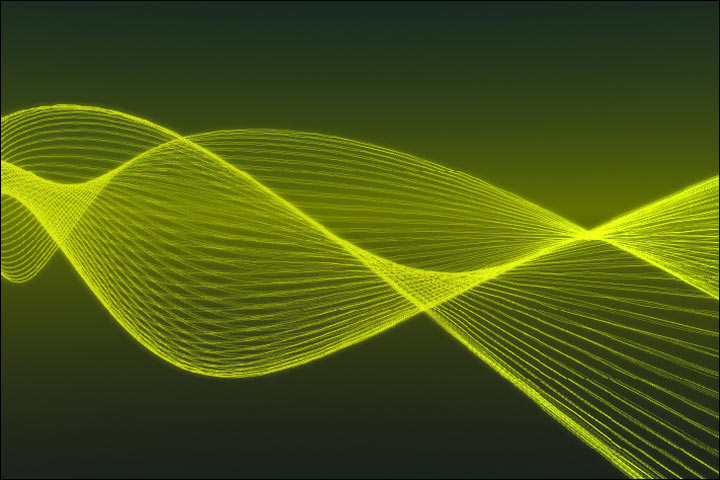 Sometimes these wiggly planes "bump" into each other and temporarily merge. Debate still rages whether the wiggly bumps create wormholes or do they create temporary rifts?
Be they rifts or wormholes - they do allow passage from one plane to another. If you were to pass through such a hole, you would enter another plane. However, if you could detect the hole, but not enter it, it's theorized you would be able to "time scan" other planes as an observer.
Friday, June 5, 2009
14 days til SPACEFEST

Tick Tock... Time is running out to order your SPACE GEAR! Order Today!
 What could be better than a Space Stein for your Space beverage?
 Ohhh, baby - it's cold outside. Stay warm with a SPACE HOODIE.
Thursday, June 4, 2009


Subscribe to:
Posts (Atom)


 Posts
Posts


